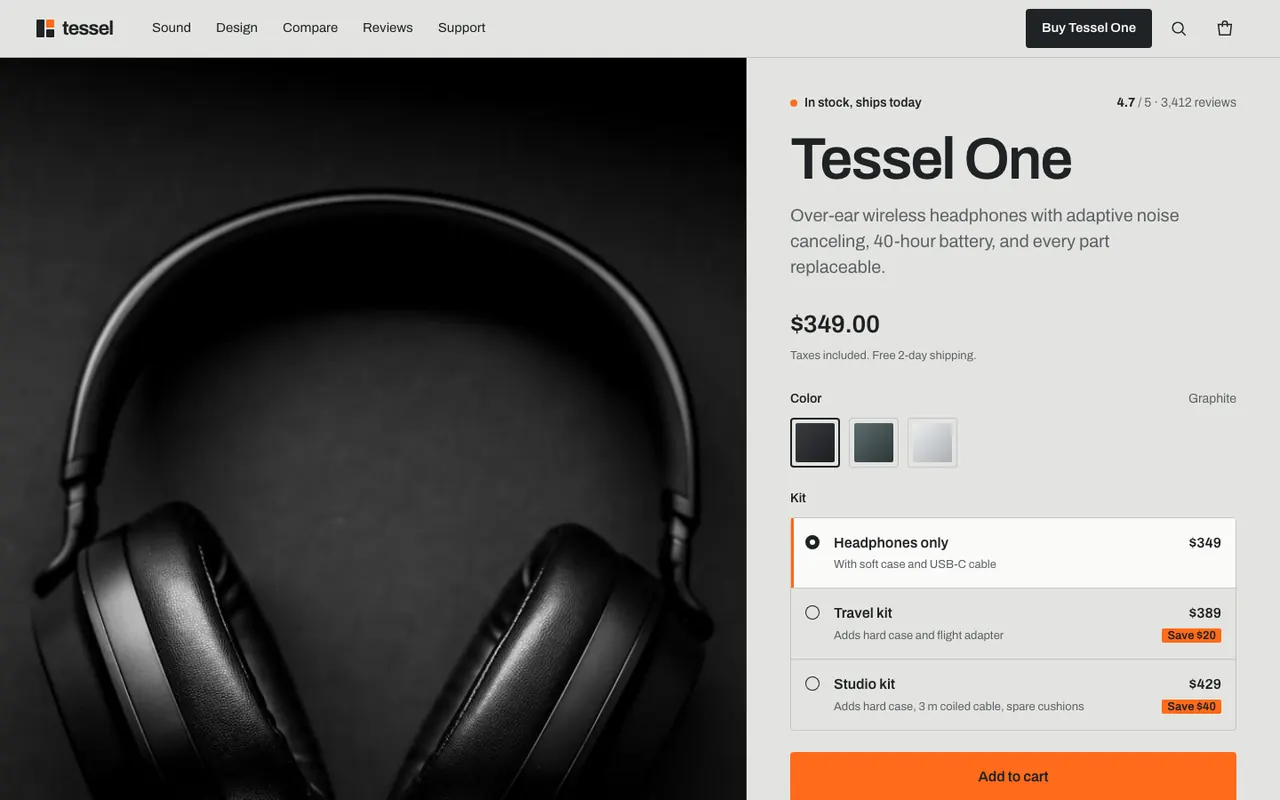

Premium product pages, minus the page builder.
Monolith is a Shopify theme for stores built around one hero product, or up to ten. The kind of product page top DTC brands pay agencies for, with no monthly fee and no extra apps.
The final price is set at launch. No subscription, updates included.
- Try before you payShopify lets you preview paid themes in your own store
- Three presetsTech, wellness and small food catalogs
- Native featuresPacks and kits as real variants
- Same-day supportOn business days, from the people who built it
- 1–10products the design is built around
- $0a month, after the one-time price
- 0apps needed for packs, kits and comparison tables
- 90+mobile Lighthouse score we build every release to
Why not a page builder?
Page builders are good software. But most one-product stores install one for a single job: a product page that looks designed. That job belongs in the theme.
| Feature | MonolithTheme, hero-product first | Page builder appInstalled on top of a theme | General-purpose themeBuilt for big catalogs |
|---|---|---|---|
| What you pay | About $350, once | Free plan, then $24–$599 a month | Free, or $100–$500 once |
| Where you edit | Shopify's theme editor | The app's own editor | Shopify's theme editor |
| Extra code on every page | None beyond the theme | The builder's scripts and styles | None beyond the theme |
| If you stop paying | Nothing changes | Builder pages can stop working | Nothing changes |
| Packs and kits in the buy box | Native variants | Often needs another app | Usually a plain dropdown |
| FAQ and product structured data | One complete JSON-LD graph | Varies by app and template | Usually product only |
| A/B tests, funnels, heatmaps | No | Often yes | No |
Where page builders win: testing and funnels. Shopify doesn't allow themes to include them, so Monolith never will. If you run weekly A/B tests, keep your builder.
Price range from the public plans of popular page builder apps in the Shopify App Store, November 2026.
The sections brands build custom
Each one is a regular theme section with nested blocks. Add, reorder or remove them in the theme editor, and fill them from metafields.
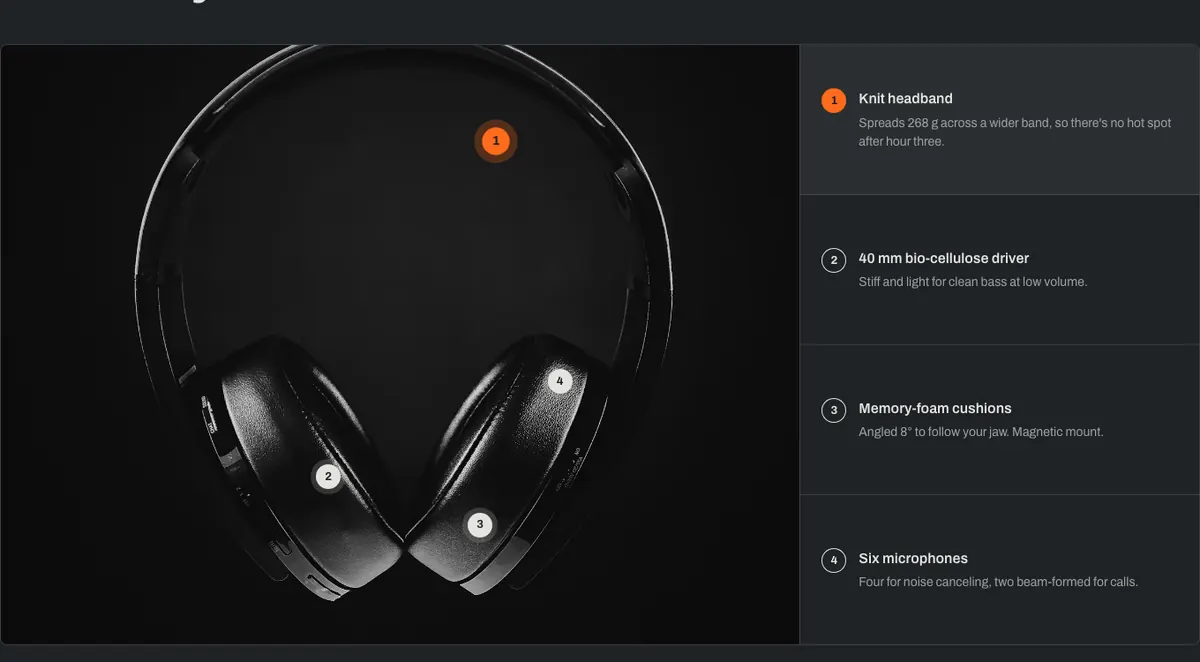
A buy box that sells packs, not just quantities
Kits and 3- or 6-packs are real Shopify variants with their own price, SKU and stock. No bundle app, no fake line items in the cart.
- Packs and kitsPrice per unit and savings, from your variant pricesVariants
- SubscriptionsSide by side with one-time purchaseSelling plans
- Delivery, returns, paymentReal text under the button, not a row of iconsBlocks
- Sticky add to cartAlways one thumb away on mobileBuilt in
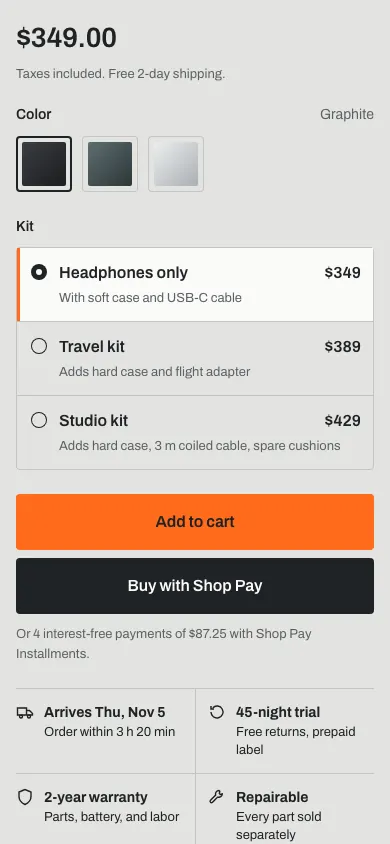
Anatomy and spec strip, for products with details worth showing
Numbered points on a photo match a legend next to it, so nothing hides behind a hover. Specs sit in a strip under the hero as real numbers that shoppers and search engines can both read.
Comparison table
Like the one above: a real HTML table with your product highlighted. It fits a phone with a locked first column.
Spec strip
Like the numbers under our hero. Battery hours, grams, servings or roast date, set as type instead of icons.
FAQ with structured data
FAQ, product, shipping and return policy go out as one JSON-LD graph, filled from the metafields you already edit.
A color scheme per product
Pick a scheme on the product, and its card, hero and sticky bar follow. Every coffee, serum or colorway gets its own look.
Blocks inside every section
Add, remove and reorder blocks in any section. No three-block limits, and font sizes you can actually change.
Clean structure
One h1 per page, a logical heading order and plain text in headings. Good for accessibility, search and AI shopping tools.
Built to score 90+ on mobile Lighthouse
That's a target, not a measurement. The theme isn't finished. Every build is tested against it, and we'll publish median scores from the real demo stores at launch.
- Critical JavaScript
- Under 15 KB
- All JavaScript on a product page
- Under 50 KB
- Critical CSS, inlined
- Under 14 KB
- Third-party scripts in the theme
- None
- Hero image
- Loaded first, everything else lazy
Three presets, one structure
Each preset is a starting point with its own fonts, colors and corner shapes. Switch between them without losing your content.
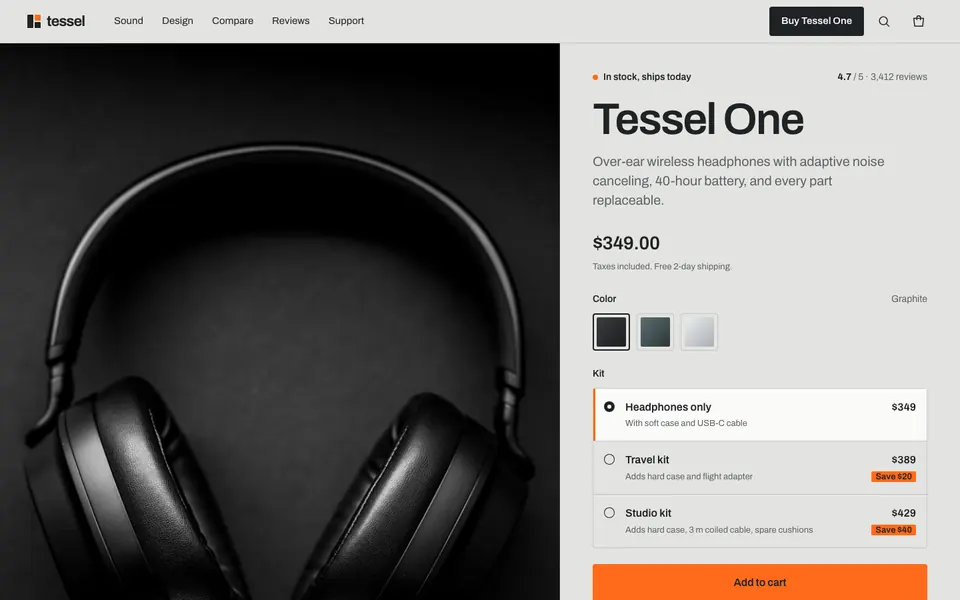
Monolith Tech and hardware
A dark product stage, spec strip, anatomy and kits. For products people compare on numbers.
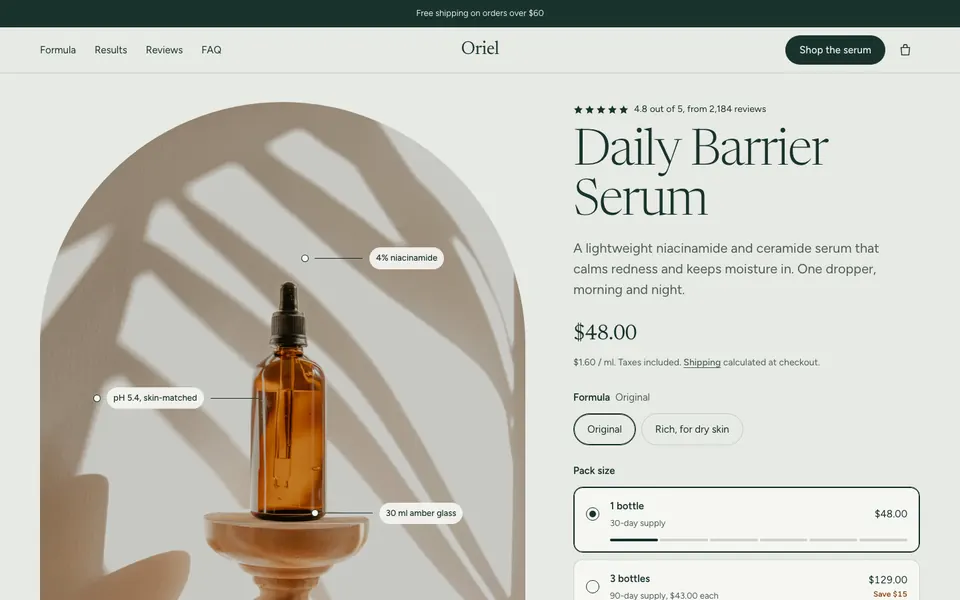
Formula Wellness and beauty
Packs of 1, 3 and 6 with days of supply, an ingredient ledger and before and after.
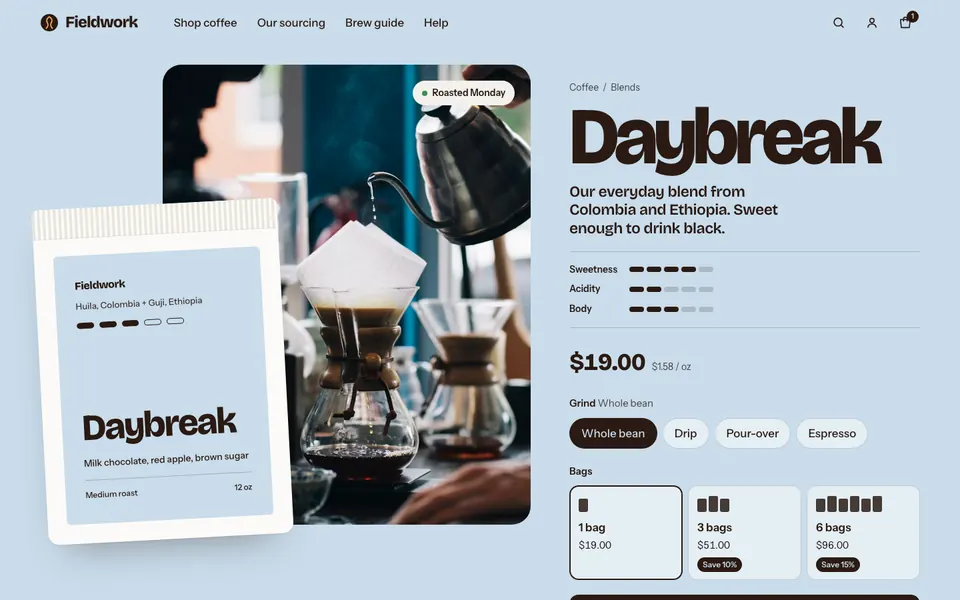
Label Food, drink, small catalogs
A color per product, taste scales and a read-the-label section. Built for two to ten products.
Design mockups from November 2026; preset names may change. Brands, prices and reviews in the mockups are fictional demo content, and photos are Unsplash placeholders.
Hear about launch pricing first
We plan to open with launch pricing for a short time. Waitlist members get the email the day it starts, before it's announced anywhere else.
Questions
Something missing? Email [email protected].
When does Monolith launch?
We are aiming for 2027. Every theme goes through Shopify's own review before it can be sold, and that takes weeks we don't control, so we won't promise a date. The waitlist gets one email the day it goes live.
Where will it be sold?
Only on the official Shopify Theme Store. You buy and install it from your Shopify admin, and Shopify handles payment, licensing and updates.
What will it cost?
We plan around $350, paid once. The final price is set when the listing goes live. Theme Store themes include free updates, and there is no monthly fee.
Can I try it before I buy?
Yes. Shopify lets you add any paid Theme Store theme to your store and customize it with your own products before you pay. You only pay when you publish it.
What do I need to use it?
A Shopify store on any plan. Monolith is an Online Store 2.0 theme, so it works with the standard theme editor, metafields and app blocks.
Subscriptions need a selling-plan app such as Shopify Subscriptions; the buy box is designed for them.
Does it work with more than ten products?
Yes. Collections, filtering, search and the blog are fully built, because every Theme Store theme must support a full catalog. The design is tuned for stores with one to ten products.
What happens to my email address?
We use it to send the launch email and, if you answer the optional survey, to understand what to build first. No trackers, no advertising, it is never sold, and you can ask us to delete it at any time. The details are in the privacy policy.